Your Comprehensive Guide to Central and Nasal Field Testing
Even patients who notice changes in their vision might not realize they have blind spots in their nasal peripheral area. This is why the N-30 visual field screening is an essential first step for detecting early glaucomatous damage and neuro-ophthalmic conditions. Vision loss in this area could be an early sign of glaucoma, retinal disease, or optic neuropathy. These conditions often go undiagnosed until significant damage has occurred, but can be identified sooner with the right targets. The N-30 visual field test can help uncover these hidden conditions. It focuses specifically on the central vision plus nasal targets and detects defects that might be (literally) overlooked.
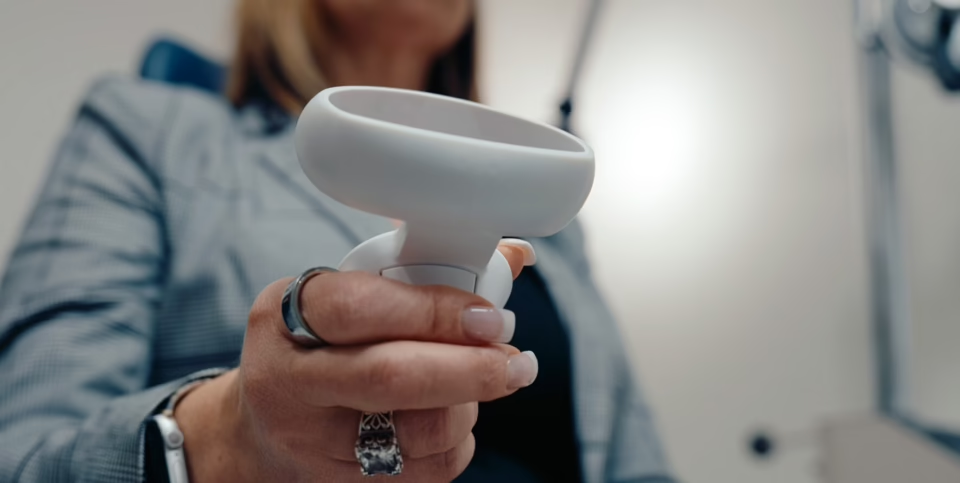
Carrot makes it easy to shift the target focus for a faster, more efficient, and more comfortable patient experience, with accurate test results uploaded directly to your EHR. Our first-of-its-kind headset technology eliminates the need for bulky perimetry machines, reduces test time, and helps you deliver more accessible exams for all your patients.
N-30 Visual Field Exam Overview
The N-30 visual field test uses frequency doubling technology to examine 19 points within the central 30-degree vision radius. This exam functions as both a glaucoma and neurovisual field test, especially effective for early detection of optic nerve dysfunction and neurological deficits.
In order to test nasal peripheral vision, the fixation point is shifted by 10 degrees after all other points have been tested. This assessment is especially important for early glaucoma screenings and for revealing neurological conditions.
The N-30 is quick to perform, so it’s a popular choice for busy practices. To make the test even faster and more accurate, Carrot’s patient-friendly headset and advanced algorithms can cut down exam time by up to 50%. This way, you can support more patients daily without sacrificing testing accuracy. As a portable N-30 perimeter, the Carrot headset allows you to screen for early field loss without the limitations of traditional tabletop devices.
Academic references and clinical validation

|
This study evaluated the effectiveness of the N-30 test in detecting glaucomatous visual field loss and highlighted its diagnostic accuracy. |
|
|
Research comparing the N-30 and C-20 indicated that they both have similar sensitivity and specificity in detecting glaucoma, but the N-30 offers broader central field assessment. |
Carrot is proud of its commitment to the highest security and quality assurance standards. We are SOC 2 Type 2, HIPAA, FDA, and Health Canada compliant.

The N-30 Visual Field Exam at a Glance
Early signs of glaucoma, retinal disease, or optic neuropathy can hide in the nasal field, but the N-30 allows you to uncover these conditions earlier and intervene more effectively. This test excels at providing fast routine screenings with high sensitivity to these specific visual field changes. Compared to other exams, the N-30 may be less affected by refractive error, so it’s reliable and practical. But because the N-30 focuses primarily on the central 30 degrees, it’s not ideal for full-scope testing or identifying other kinds of peripheral visual field loss.
As part of the Carrot N-30 screen, this exam is especially useful in high-volume clinics or mobile environments where patient comfort, speed, and diagnostic precision are critical.
Pros and Cons of the N-30 Exam
The pros and cons that follow can help guide you toward the ideal scenarios to incorporate this test into your patients’ diagnostic assessments.
|
Pros
|
Cons
|
List of Ocular Diseases Monitored and Diagnoses Identified by the N-30 Visual Field Exam
|
|

Example N-30 Report

Billing and Coding for the N-30 Visual Field Exam
When billing for a portable N-30 perimeter such as Carrot, use CPT code 92082, which supports intermediate visual field examination.
The Medicare Physician Fee Schedule (MPFS) allows reimbursement between $19 and $60, depending on your location, setting, modifiers, and other factors.
When is the N-30 visual field exam required?
The N-30 test is particularly useful for patients at risk of glaucoma, those with ocular hypertension, or individuals experiencing unexplained visual disturbances. Since it focuses on the central 30 degrees of vision, it is ideal for detecting early glaucoma, optic nerve dysfunction, and certain neurological conditions that affect central vision. The N-30 may be performed annually or semi-annually to track changes, but as conditions progress, you may switch to more sensitive tests.
Is the N-30 visual field test required for driver’s licenses?
No, the N-30 test is not typically required for driver’s license vision screening. Most driving eligibility assessments focus on peripheral vision and overall visual acuity. If a patient with specific medical conditions requires additional testing for driver’s licensing, you may need to administer broader exams like the FullField 120 or Esterman.
Start Conducting the N-30 Exam with Carrot
The N-30 test is fast, reliable, and relevant — especially when delivered through a portable N-30 perimeter like Carrot. Whether you’re using it for neuro visual field testing, stroke visual field assessment, or early glaucoma detection, this tool offers reliable, repeatable performance across clinical settings.
Traditionally, conducting the N-30 on bulky perimetry equipment takes longer and is uncomfortable for patients. Carrot is a patient-friendly experience with real-time data analysis for better testing accuracy and immediate insights. Available with Carrot’s Standard and Pro subscriptions, the N-30 has rightfully earned its place as one of optometrists’ and ophthalmologists’ favorite go-to screenings.
Want all 23 of our comprehensive test guides in your inbox? Fill out the form below.

Frequently Asked Questions
N-30 targets the nasal step and temporal crescent, areas often affected in stroke or traumatic brain injury, whereas C-40 focuses on central glaucoma-related zones.
Carrot completes one eye in approximately 40 seconds, allowing a full bilateral screen under 90 seconds, including instructions.
Yes. Use CPT 92081 (automated suprathreshold visual field). Most carriers allow one screen per patient every 12 months when a neurologic ICD-10 (e.g., I69.32) is documented.
Peer-reviewed data show approximately 85% sensitivity and 90% specificity compared with a 30-2 threshold when the defect spans ≥10 dB.