Your Comprehensive Guide to Carrot’s Full Field 120 Visual Field Test
As the name suggests, the Full Field 120 visual field test is a comprehensive assessment of a patient’s entire visual field. Other exams acutely focus on specific regions to collect details, but this test is more all-encompassing. With this broad range, you can identify common conditions like glaucoma, macular degeneration, or neurological conditions.
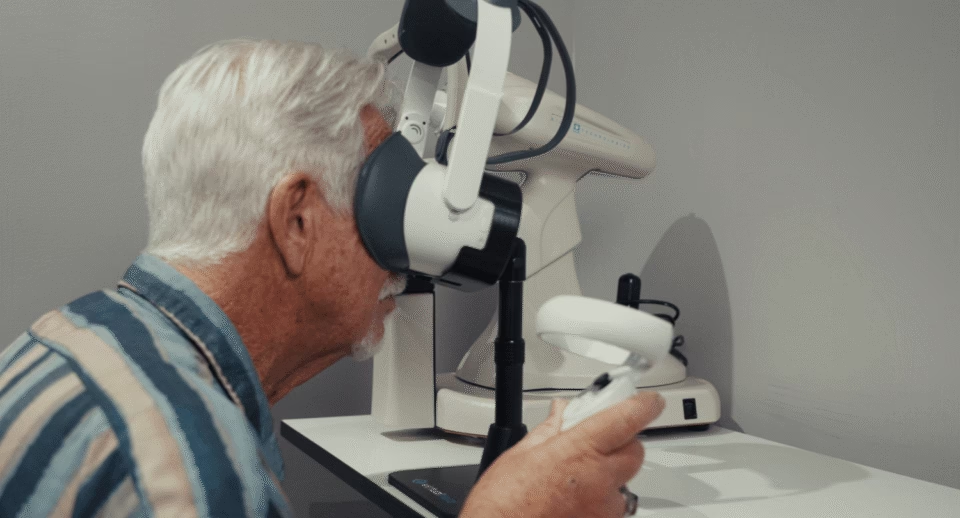
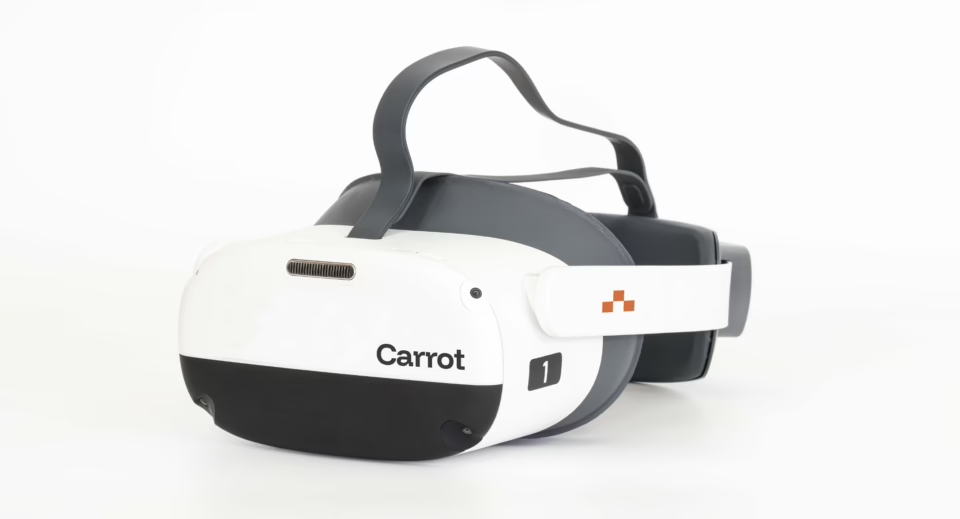
To make this test even more efficient and useful, Carrot’s wide‑field visual field device speeds up the process and collects accurate insights within moments. Offering more comfortable, accessible, and convenient Full Field 120 testing elevates the patient experience while supporting your practice’s workflow.
Full Field 120 Visual Field Test Overview – Using a Portable Wide‑Field Perimeter
For people with normal vision, each eye’s visual field spans 120 degrees horizontally and 90 degrees vertically. A peripheral visual field screener like Carrot’s Full Field 120 test can pick up on the early signs of damage for faster intervention and more opportunity to preserve vision.
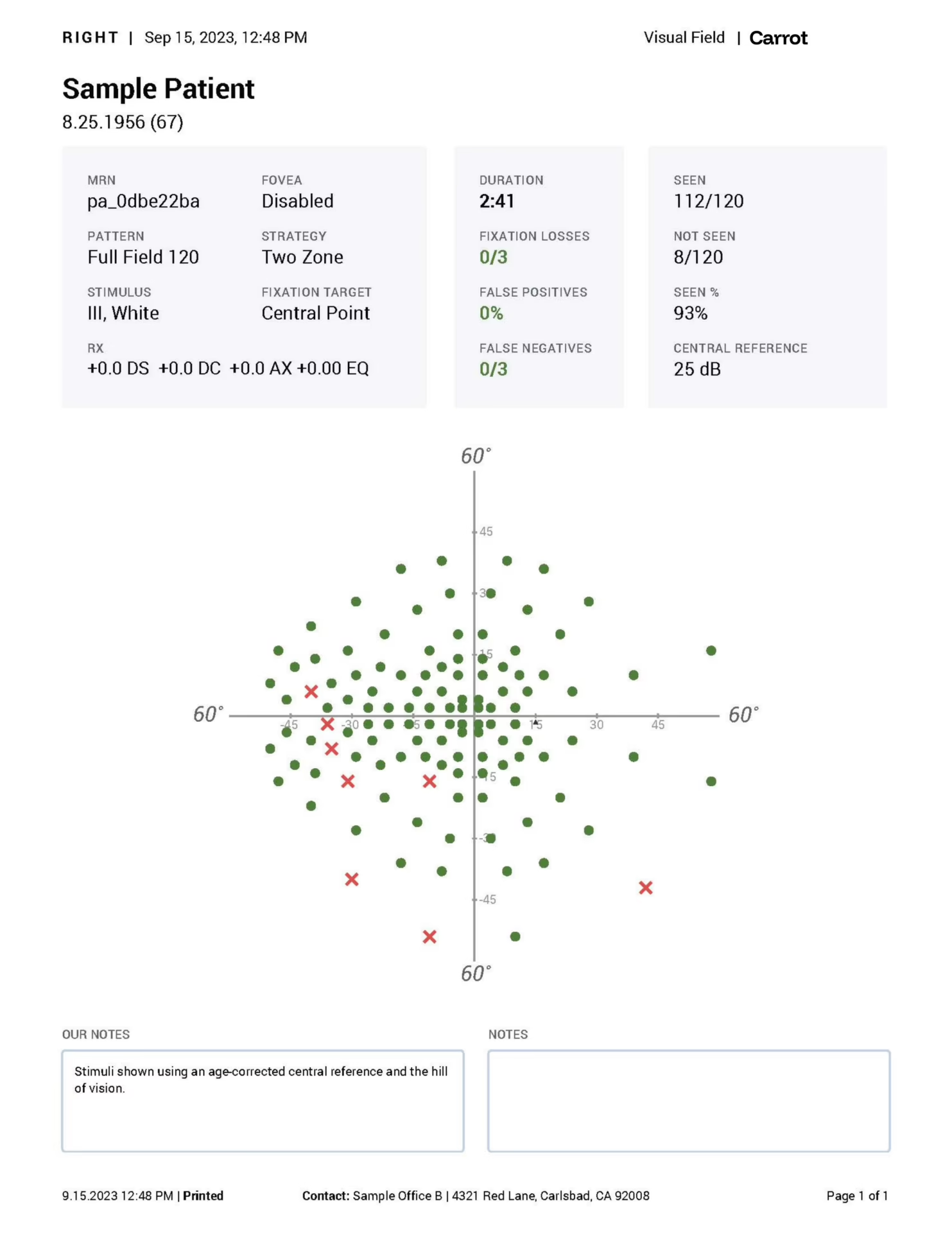
This test presents stimuli in both the central and peripheral vision areas and can be performed monocularly or binocularly to assess natural vision. The “120” refers to the number of data points collected from both eyes, each with an area 55 degrees from fixation. Conditions that cause optic nerve damage can create scotomas, and no matter where these scotomas appear, you can detect them using the Full Field 120 test. Because this visual field test has so many data points, it can take a little longer than others. Our portable wide‑field perimeter speeds up the process and offers a more patient‑friendly experience.
Bonus: Carrot’s Full Field 120 visual field test doubles as a rapid peripheral visual field screener for stroke, TBI, and drug‑toxicity work‑ups.
Academic references and clinical validation

|
The Full Field 120 is a suprathreshold exam, and this study showed that exams of this type perform well to screen for glaucoma. |
|
|
Since the Full Field 120 test can collect so much data, it’s sometimes used to identify clinical indicators, such as drug toxicity. |
Clinics that implement the Carrot Platform experience an average return on investment of 902%.


The Full Field 120 Screening at a Glance – Wide‑Field, 120‑Point Coverage
Mapping 120 distinct points across the entire range of central and peripheral vision makes the Full Field 120 one of the most comprehensive tests available from Carrot. This wide coverage can help detect glaucoma, optic neuropathies, and visual pathway disorders that may not appear in central-only tests. But because it’s so comprehensive, this test has a longer duration than others. Patients who struggle with fatigue or attention may find this more challenging, but Carrot cuts testing time by up to 50%.
Pros and Cons of the Full Field 120 Test
The pros and cons that follow can help guide you toward the ideal scenarios to incorporate this test into your patients’ diagnostic assessments.
|
Pros
|
Cons
|

List of Ocular Diseases Monitored and Diagnoses Identified by the Full Field 120 Visual Field Test
The Carrot Full Field 120 Visual Field test helps diagnose or monitor:
|
|

Example Full Field 120 Report

Billing and Coding for the Full Field 120 Visual Field Exam
The Full Field 120 screening is an extended visual field exam, so it can be billed using CPT code 92083. Medicare Physician Fee Schedule (MPFS) reimbursement ranges from $25 to $81, and your fee will depend on practice location, setting, modifiers, and other factors.
When is the Full Field 120 test required?
This test is often enlightening for patients with symptoms that suggest peripheral vision loss, like difficulty seeing in low light, tunnel vision, trouble driving, or reduced depth perception. Patients with unexplained vision changes could benefit from a Full Field 120 test as a way to clear up their questions. People at risk of glaucoma, neurological disorders, or retinal diseases should have their complete field of vision examined at least once.
For patients with progressive conditions like glaucoma or retinitis pigmentosa, the Full Field 120 can monitor vision and inform treatment adjustments. Early detection allows for speedier intervention, so this exam is likely beneficial for a wide range of patients.
Is the Full Field 120 required for driver’s licenses?
The Full Field 120 exam, by name, isn’t mandated for driver’s licenses, but its results often are. In most states, non-commercial drivers require uninterrupted vision of at least 100 degrees horizontally, using both eyes. The Full Field 120 can clearly identify this range, so the results from this exam are highly relevant for drivers.
To gain a commercial driver’s license (CDL), drivers require a horizontal field of vision of 70 degrees in each eye. That aligns perfectly with the Full Field 120’s capabilities. Although states rarely specify the name of the visual field exam needed for driver’s licensing, the Full Field 120’s results support these requirements for eligible drivers.
Start Conducting the Carrot Full Field 120 Visual Field Test on a Portable Wide‑Field Perimeter
When patients present with unknown visual field changes or risk factors for glaucoma, it’s worth setting aside a few extra minutes to conduct the Full Field 120. With this test, you can reveal a wide range of conditions and gain a comprehensive perspective on patients’ vision. And by conducting these exams using a Carrot headset, you can expedite and streamline the testing process without sacrificing the patient experience. When patients present with unknown visual field changes or risk factors for glaucoma, it’s worth setting aside a few extra minutes to conduct a Full Field 120 screening.
Want all 23 of our comprehensive test guides in your inbox? Fill out the form below.

Frequently Asked Questions
The Full Field 120 pattern tests out to 60° eccentricity nasally and temporally, sampling 120 suprathreshold points per eye.
The ideal clinical use for the Full Field 120 is for establishing peripheral vision baselines in glaucoma suspects, neuro-ophthalmology referrals, and high-risk medication users (e.g., vigabatrin).
Use CPT code 92081 for billing the Full Field 120 Carrot test, as it’s a suprathreshold screening.
Yes, the Carrot headset is designed to accommodate patients wearing their glasses during testing. It also includes trial lens adapters.
With Carrot, a Full Field 120 test is approximately two minutes for both eyes in binocular mode or three minutes in monocular mode.
Yes. Serial exams overlay automatically and percent field loss is graphed for progression documentation.