Your Guide to Central Vision Monitoring with Carrot
Central vision loss has a significant impact on patients’ quality of life, but they don’t always notice early signs like blind spots. Some of these subtle visual defects can’t be picked up by standard 24-2 or 30-2 exams. The 10-2 visual field test, however, is specifically designed to detect macular changes early using a central visual field device. With quick intervention, you can help preserve vision. Incorporating the 10-2 visual field exam can make it possible to detect macular conditions, glaucoma, and optic neuropathies earlier.
The 10-2 visual field test is generally considered a supplemental exam, but it comes standard with all Carrot subscriptions. This guide breaks down how this test works, its applications, and how Carrot upgrades the patient experience so you can gain more precise results.
10-2 Visual Field Exam Overview
The 10-2 visual field test assesses 68 points within the central 10 degrees — this is much more detail than the standard 12 points in other visual field tests. With this increased sensitivity and focus on the central vision, you can detect defects that might not register as abnormalities in broader tests.
This more targeted assessment of the macular region is especially useful for identifying gradual changes in progressive conditions like age-related macular degeneration and glaucoma. The 10-2 can also support patients who are managing chronic conditions or taking medications that impact vision.
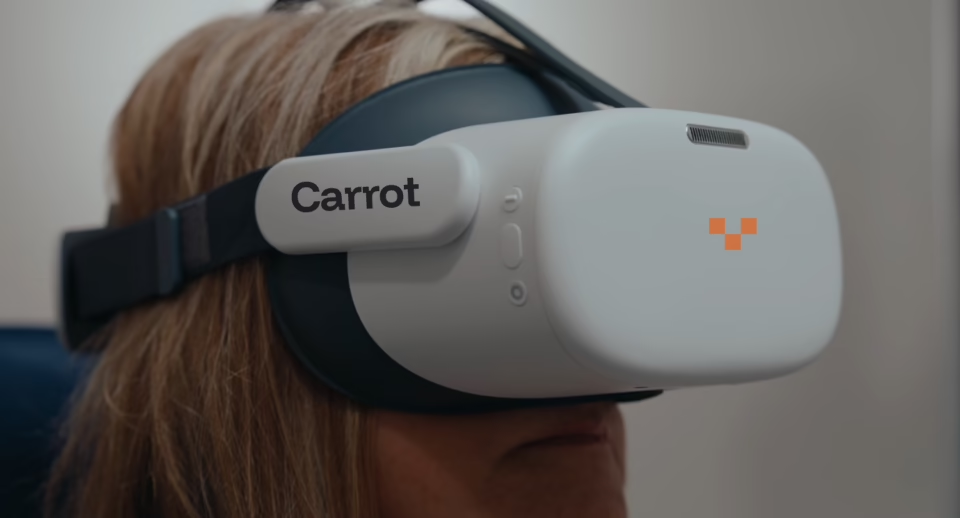
Carrot’s 10-2 exam is faster, easier, and more accessible than testing on traditional tabletop perimeters. As a portable 10-2 perimeter, the Carrot headset allows you to perform this detailed macular exam in any exam room or mobile setting — eliminating the need for bulky equipment or darkened rooms. Our headset doesn’t require much space or a darkened room. The Carrot headset can be used almost anywhere in your practice — wherever the patients feel comfortable. This way, you can improve the exam experience, expand your practice’s service offerings, and provide more comprehensive eye care to more of your patients.
Academic references and clinical validation

|
This study found that 10-2 visual field tests often detect central visual field defects that may be missed by 24-2 tests in glaucoma patients, glaucoma suspects, and ocular hypertensives. Abnormal results on the 10-2 test were identified in 61.5% of early glaucoma cases, 39.5% of glaucoma suspects, and 35.4% of ocular hypertensives classified as normal by 24-2 testing. The Carrot macular 10-2 test provides high-resolution results that correlate well with OCT imaging, offering greater diagnostic clarity especially in glaucoma suspects and early-stage disease. |
|
|
A recent study compared the 24-2, 24-2C, and 10-2 visual field tests to determine when to incorporate the 10-2. The results suggest that when 24-2 testing shows poorer mean deviation or more central defects, the 10-2 test can offer more detailed insights that help monitor disease progression. |
|
|
The 24-2C and 10-2 visual field tests perform similarly in detecting overall central vision loss, but the 10-2 stands out by identifying more detailed defect clusters and aligning better with optical coherence tomography (OCT) imaging. While the 24-2C is quicker and more effective for spotting central defects, the 10-2 offers a more thorough look at central vision changes. |
Did you know? The Carrot headset includes automated audio translations in over 40 languages for inclusive patient engagement?


The 10-2 Visual Field Exam at a Glance
The 10-2 visual field exam pinpoints abnormalities in the central vision, which is, of course, essential for everyday tasks like reading and driving. These tasks may become more difficult for patients, but they might not attribute it to vision changes before symptoms become bothersome. This test’s precision is key to monitoring progressive eye conditions and detecting early symptoms. Still, this supplemental test can feel time-consuming to patients; it doesn’t offer a full-scope review of the patient’s visual field, and because it’s so sensitive, there may be a higher risk of false positives.
Pros and Cons of the 10-2 Exam
The pros and cons that follow can help guide you toward the ideal scenarios to incorporate this test into your patients’ diagnostic assessments.
|
Pros
|
Cons
|

List of Ocular Diseases Monitored and Diagnoses Identified by the 10-2 Visual Field Exam
The Carrot 10-2 Visual Field test helps diagnose or monitor:
|
|

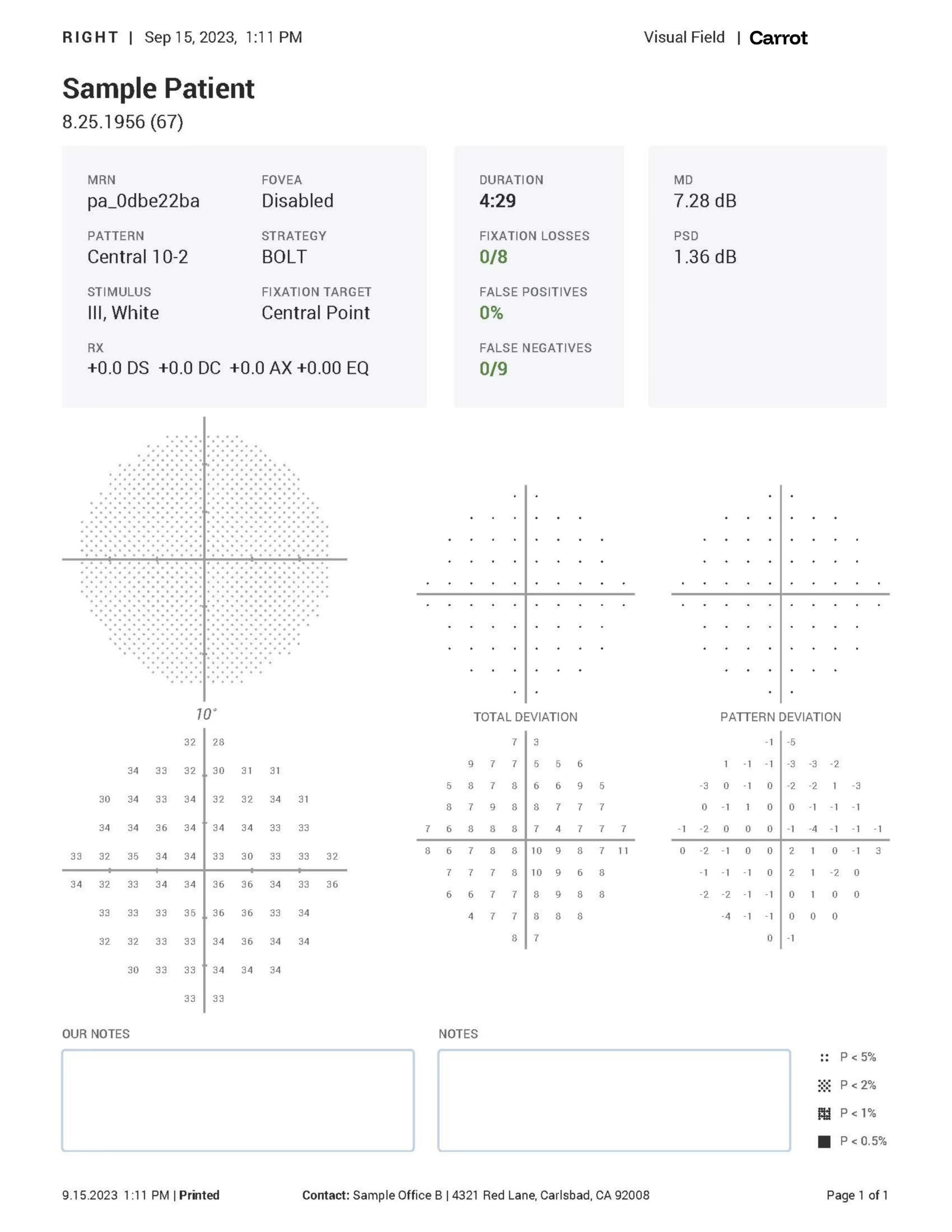
Example 10-2 Report

Billing and Coding for the 10-2 Visual Field Exam
The 10-2 visual field exam is billable to insurance under CPT code 92083, which is designated for extended visual field exams.
According to the Medicare Physician Fee Schedule (MPFS), reimbursement usually ranges from $40 to $90 per test. Your exact fees will depend on your location, setting, and other payer-specific factors.
When is the 10-2 visual field exam required?
The 10-2 visual field exam is particularly useful for glaucoma, macular degeneration, diabetic retinopathy, neurological conditions, trauma-related vision loss, and toxic retinopathy. For patients with moderate to advanced glaucoma or those showing central visual field defects on a 24-2 exam, the 10-2 can be conducted every three to six months to track progression.
This test may also be ordered for individuals taking medications like hydroxychloroquine or people with diabetes, hypertension, and neurological conditions that increase the risk of central vision loss. The 10-2 test is best used to detect subtle changes in the macular region that patients may not notice on their own. It is also a valuable tool for Plaquenil visual field monitoring, helping detect early signs of retinal toxicity in patients taking hydroxychloroquine.
Is the 10-2 visual field test required for driver’s licenses?
In most U.S. states and Canada, basic field-of-vision checks are all that’s required for driver’s licensing. The 10-2 is a more advanced, targeted screening, so it’s not mandatory for drivers.
Start Conducting 10-2 Visual Field Exams with Carrot
The 10-2 visual field test is an opportunity to diagnose and monitor a range of eye and neurological conditions, especially when broader tests are inconclusive. More data points in the central 10 degrees can reveal the earliest signs of glaucoma, help diagnose neurological conditions and neuropathies, and monitor macular degeneration with better precision.
You can improve the patient experience and collect pinpoint-accurate data with Carrot. As a portable 10-2 perimeter and central visual field device, the Carrot headset simplifies the 10-2 visual field test workflow — making it faster, more efficient, and far more accessible to your most vulnerable patients.
Want all 23 of our comprehensive test guides in your inbox? Fill out the form below.

Frequently Asked Questions
The Carrot headset completes a bilateral 10-2 in approximately 4 minutes total, 40% faster than a tabletop Humphrey 10-2.
The 10-2 samples the central 10° with 68 threshold points — exactly where hydroxychloroquine damage first appears. AAO 2024 guidelines list it as the gold-standard macular field test.
Bill 92083 once per session. It includes both eyes and the physician’s interpretation.
A confirmed > 1dB decline per year signals rapid macular progression and should trigger therapy escalation.
With Carrot, a one-click export generates PDF, CSV, and FHIR JSON files that attach directly to most leading ophthalmic EHRs. Also, with DICOM 360 Sync, available with a Pro subscription, Carrot pushes finalized exam reports automatically to your EMR/EHR. The moment the test ends, the report is securely filed in the correct PACS record and automatically paired with the correct patient record, giving doctors immediate access with zero manual uploads.
Yes. Eye tracking logs fixation losses, false-positives, and false-negatives in real time, flagging reliabilities > 20% for retest.