Strabismus is more than cosmetic. It is a condition that affects about 1 in 25 adults and children; misaligned eyes can impact vision, depth perception, eye strain, and self-confidence. Poor eye muscle control can look like constantly crossed eyes or a so-called lazy eye (known clinically as amblyopia), but it isn’t always noticeable. It may even be intermittent. Understanding the nuances of strabismus, available screenings, and treatment options can help you treat patients more effectively — and improve their quality of life.
Strabismus Overview
Strabismus occurs when the eyes are not aligned properly. One eye might look straight ahead, while the other could turn inward, outward, upward, or downward. There are four classifications for the direction of eye turns:
- Esotropia (inward)
- Exotropia (outward)
- Hypertropia (upward)
- Hypotropia (downward)
In each case, you’ll need to consider how strabismus presents — is it constant or intermittent? Does it only affect one eye, or does it alternate between them? Does the patient blink or squint to compensate? How does it impact their vision?
Strabismus tends to run in families and is often linked to conditions that affect neuromuscular control, like cerebral palsy, stroke, Down Syndrome, or TBI. It can even be caused by uncorrected hyperopia and extreme eye strain. In many cases, there’s no direct cause, but it’s often very treatable.
How Strabismus Affects Vision
Strabismus doesn’t just affect the way the eyes look — it impacts how the brain processes visual information. When the eyes are misaligned, the brain struggles to merge the two images, which can result in double vision or a lack of depth perception. To avoid double vision, the brain may begin ignoring the image from one of the eyes, leading to amblyopia in the neglected eye. This behavior can have a significant impact on one’s quality of life and ability to perform everyday tasks, such as driving or reading.
Strabismus vs Lazy Eye (Amblyopia)
Strabismus refers to the misalignment of the eyes, whereas lazy eye (amblyopia) refers to a condition in which one eye does not develop proper vision. Strabismus can lead to amblyopia when left untreated. Treatment and diagnosis for amblyopia vs strabismus differ, so it’s essential to recognize the significant differences.
| Strabismus | Amblyopia |
|---|---|
| Can develop at any age, but is most common in childhood | Typically develops in early childhood |
| Symptoms include double vision, poor depth perception, eye strain, and squinting | Symptoms include blurry vision, poor depth perception, and monocular vision |
| Often visibly noticeable | May be undetectable to others |
| Significant impact on depth perception | Minimal impact on depth perception, but reduced stereopsis |
| Diagnosed through a comprehensive eye exam that includes tests like the cover test, corneal light reflex test, and an extraocular motility exam | Diagnosed with visual acuity tests |
| Treatment goal is to align the eyes and encourage EOM coordination | Treatment goal is to improve visual acuity in the weaker eye |
How Is Strabismus Diagnosed?
Diagnosing strabismus requires a combination of tests that assess both eye alignment and binocular coordination. One of the most fundamental tools is the cover test, which helps determine whether an eye deviates while focusing on a target. By alternately covering and uncovering each eye, providers can identify both constant (tropia) and latent (phoria) forms of misalignment. When combined with prism lenses — known as the alternate prism cover test — clinicians can also measure the exact degree of deviation.
For younger or nonverbal patients, simpler observational methods, such as the Hirschberg test, are often used. This test evaluates the position of the light reflex on the cornea when a light is shone into the eyes. If the reflex is off-center, it can indicate a misalignment. To quantify this deviation more precisely, providers may follow up with the Krimsky test, which adds prisms until the light reflex is centered in both eyes.
Additional assessments provide deeper insight into binocular function and ocular motility. Tools like the Worth 4 Dot test and Maddox rod test help uncover sensory adaptations such as suppression or diplopia that may result from strabismus. Advanced methods, such as the synoptophore or Bagolini striated lenses, offer more specialized insights into abnormal retinal correspondence and fusion ability.
An additional component of strabismus screening is often an extraocular muscle (EOM) exam. This test evaluates the function of all six eye muscles and their coordination. It’s already a standard component for most comprehensive eye exams, but testing is traditionally limited to manual screening with a penlight and an objective assessment.
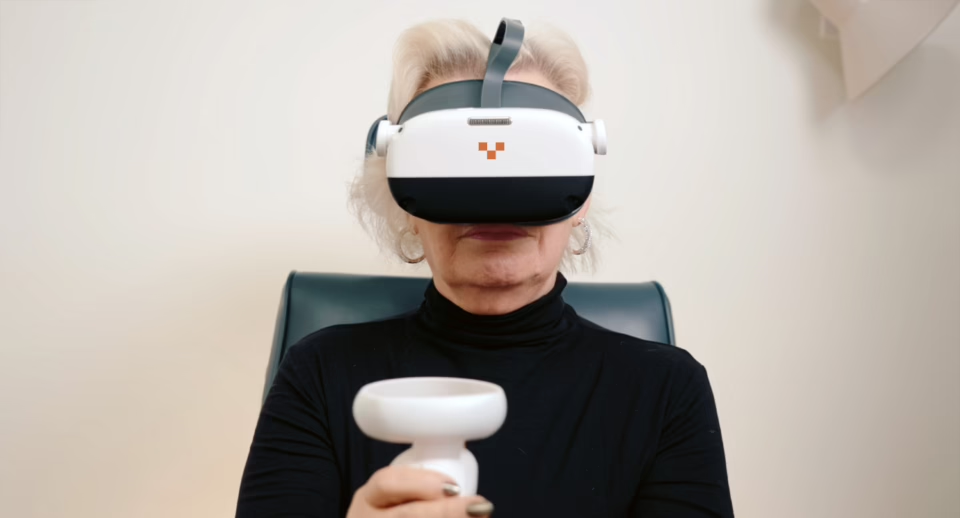
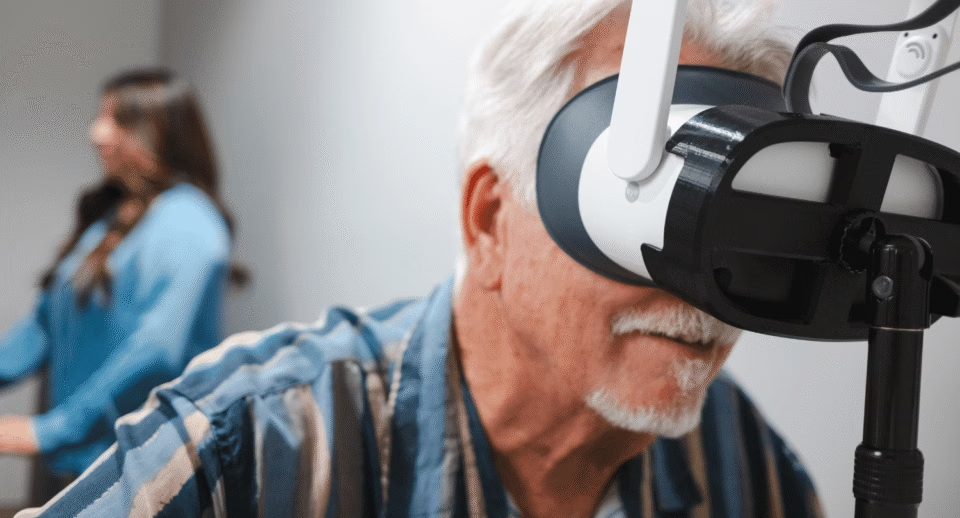
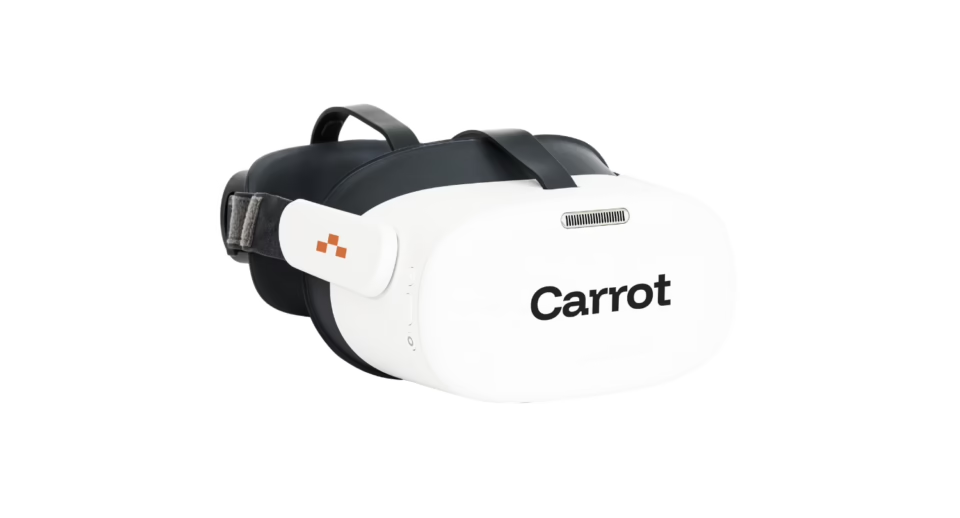
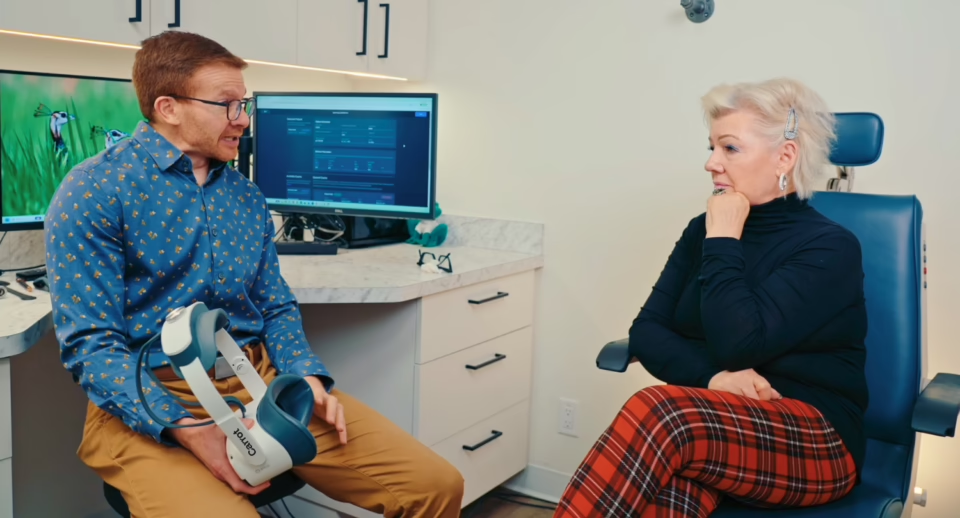
Carrot modernizes EOM testing with real-time eye tracking and precise stimuli. Digital testing collects video, images, and details so you can review objective data. Higher screening accuracy allows you to detect subtle symptoms that patients may be compensating for. This way, you can provide more targeted treatment and intervene sooner.

Treating Strabismus
Strabismus is treatable. Your specific approach will depend on the type, severity, and underlying cause of the condition:
- Eyeglasses. Minor misalignment or strabismus related to refractive errors can often be treated with corrective lenses. Prism glasses can also help reduce double vision.
- Vision therapy. Exercises to improve coordination and strengthen eye muscles can make a significant difference. This modality is especially effective for patients with mild strabismus.
- Eye patches. Patients with amblyopia can benefit from an eye patch that covers the better eye, allowing the weaker one to become stronger.
- Botox. A tiny, targeted dose of Botox directly into the eye muscle may help strengthen the eye.
- Surgery. If non-invasive treatments aren’t effective, strabismus surgery can adjust the length or position of eye muscles to improve alignment. 80% of patients experience significant improvement with this treatment.
Quality Patient Care through Quality Screening and Diagnostic Capabilities
Achieving high accuracy in strabismus screening is crucial for effectively addressing this condition, which extends beyond mere cosmetic concerns to significantly impact visual function and quality of life. By understanding the nuances of strabismus, using comprehensive screening methods, and implementing timely, personalized treatment strategies, eye care professionals can make a profound difference in their patients’ lives, leading to better vision and improved well-being.